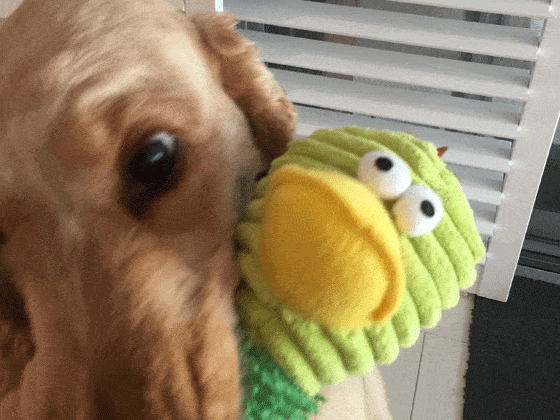
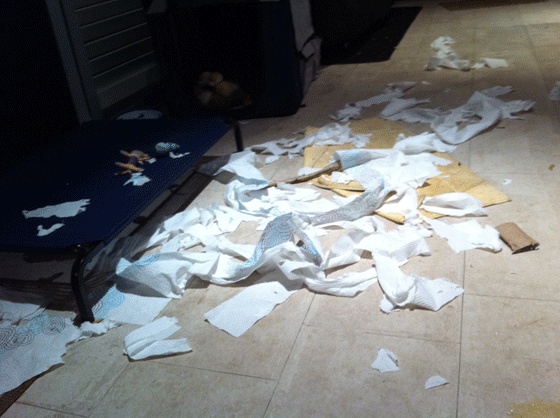
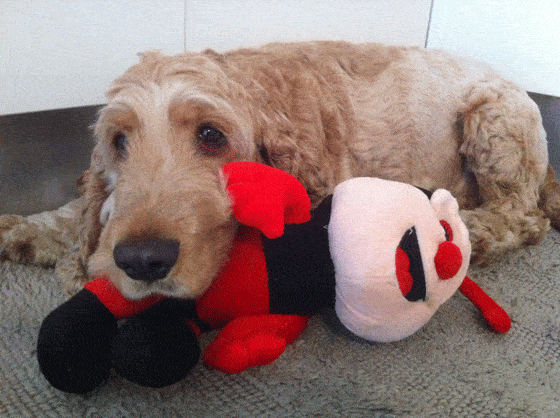
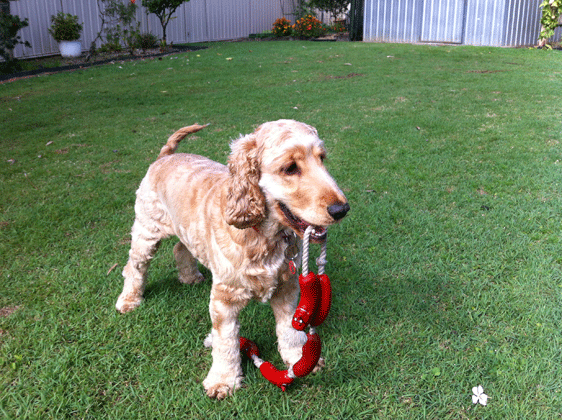
If your dog is on a ‘chew and destroy’ mission it’s usually because of one of these 4 reasons: exploration, teething, hunting instinct or pica.
‘Destructive chewing’, or ‘inappropriate chewing’ behavior is most common in puppies and can start as early as 3 weeks old. This is when the first deciduous teeth can begin popping through the gums.
Destructive chewing isn’t a problem exclusive to puppy owners. Older dogs can also show signs of inappropriate chewing which has either carried over from puppy-hood or started suddenly as an adult dog.
How many teeth do dogs get?
Dogs get 2 sets of teeth, like humans. They have 28 deciduous teeth and 42 permanent teeth, or secondary teeth. Deciduous teeth are also known as milk teeth or baby teeth.
Why do dogs chew their bed?
There are a lot of possible causes for chewing; these are the most likely with some being much more common than others.
1. Puppy Exploration
Much like human babies, puppies are curious about the world around them and like to explore. Babies are often seen putting toys in their mouth, and that’s because the mouth contains many sensory nerve endings that connect directly to the brain. Essentially, by putting something in the mouth, babies can discover more about that object.
It’s exactly the same for puppies. In terms of puppy exploration, it may not be necessary to focus on how to stop dogs from chewing their bed. It might simply be something that’s normal and your puppy quickly grows out of.
2. Teething
Again, let’s think about human babies. Teething is a very painful experience, and it involves teeth literally breaking through the gum. This is definitely something that’s not pleasant.
Gums become inflamed, swollen, raw, and sore. By putting pressure on the gums or chewing objects the pain is relieved temporarily. It’s the same for puppies. They find relief in chewing, and it mightn’t be necessary to dive any deeper looking for a reason. You might find that destructive chewing stops naturally as the last of the deciduous teeth come through.
3. Hunting
Dogs are natural hunters, and they instinctively want to hunt, gather food, and look after and protect their family. Of course, at home there’s very little available for a dog to hunt, so they use a bit of imagination. That shoe there? That’s a rabbit that he’s going to bring home to his loyal family. That brand new dog bed? That’s a bird your dog has just captured.
Dogs do this because it’s built into them, it’s natural – it’s what they think they should do. In these cases, it helps to introduce chew-appropriate toys.
4. Pica
Pica is a rather strange medical condition common among dogs. It leads them to crave and devour non-food items around the home. Items like shoes, beds, towels, soil, and some dogs have even tried to eat stones.
The American Society for the Protection of Cruelty to Animals (ASPCA) reports that Pica often develops in dogs that are not being fed a nutritionally balanced diet.* If dogs are missing a nutrient in their food that’s vital to their growth and development, they’ll seek it elsewhere.
Make sure your dog is getting the nutrients he needs in his diet.

Ways to stop dogs from chewing
If you’re sure the cause of destructive chewing isn’t because of an underlying medical issue, there are a number of ways that the unwanted behavior can be deterred, both in young puppies and in older dogs.
This article contains affiliate links. If you make a purchase after clicking on a link I may earn a small commission at no extra cost to you.
These are a few suggestions to try out at home.
1. Introduce appropriate chewing toys
If your dog is determined to chew, try introducing some appropriate chew toys and items. Try swapping them out too. By this I mean don’t have them all out at once, put some away, and change them up occasionally (apart from your dog’s favourite) so he has different toys to explore. Encourage your dog to chew on these rather than on his bed or any other inappropriate items.
Apart from chew toys, dental chew sticks work well, and, if you’re comfortable giving your dog bones, these can also be beneficial. Just remember to remove any pieces of bone that could be small enough to swallow, and stay away from bones that splinter easily, like chicken bones.
2. Attention diversion
Some dogs will chew because they’re bored. This is one of the most common reasons for sudden destructive chewing behavior in older dogs.
Divert your dog’s attention with chew toys.
Take his mind off chewing by going for a walk or playing games with him.
Dental chew sticks are a
- reduce plaque tartar build-up
- low fat, no sugar, no artifical colours or flavours
- gently abrasive texture
The trick is to try not to let dogs become too bored, or they’ll turn to chewing simply as something to pass time.
3. Anti-chew sprays
Some dog owners love anti-chew sprays, others hate them. It’s really a matter of personal choice. The concept of anti-chew sprays is that they taste bad and repel dogs, and eventually the dog will no longer attempt to chew their bed because of the poor taste.
Anti-chew sprays can be very beneficial, but always check the ingredients before buying.
Those with bittering agents are typically very safe to use around dogs, but watch out for aluminium sulphate. While small quantities are believed to be harmless, the risks are not fully understood, and it’s been shown to affect brain function* in adults. That’s not something we want around our dogs.
4. Remember to puppy proof
If your dog is chewing inappropriately, remember to puppy-proof your home (even if you’ve got an older dog). If dogs are chewing their beds, then they’re potentially chewing anything else left on the floor, or within their reach.
This could be cleaning solutions or other chemicals that could prove to be dangerous to their health.
Encouraging different behavior in dog takes time and patience. It isn’t something that’s going to happen overnight.
It’s going to take a lot of reminding your dog of his chew toys, training him to do things differently, and yes, there’s going to be a few accidents along the way! It’s normal, and it pays to be prepared for mishaps.
The good news is it’s not impossible to stop dogs from chewing their bed. But while you’re figuring out the best methods for you and your dog, take precautions and keep your pup safe from chemicals and poisons.
Resources for further reading:


Thanks for nice sharing. We must take care of them. If we allow them freely, they will destroy our dog beds hihi.
Yes, absolutely Andrew. They’ll definitely find something to start chewing if we’re not diligent and looking about our buddies.
Another way of stopping dogs from eating their beds is putting you scent on it. I have a labrador and we’ve bought him many beds but he’s chewed or ripped them all apart from one blanket that we used to use before we got him. This might be because our scent is comforting to them.
Thanks Jess for this advice. I agree this is comforting to your dog.
My 8 month old doxie eats everything! There is not one dog toy except the rubber Kong that she has not destroyed. She pulls the braided toys apart and eats the string..even the Kong animals that have braided fabric limbs. I bought a toy made from fire hoses… within 1 hr… ripped and stuffing everywhere. I don’t mind the mess, I am afraid she will get sick or hurt from this stuff going in her. We just bought a tempurpedic type bed for her at Bed,
Bath and Beyond.. within 2 hrs. a 4 inch hole in it. Thankfully it is not stuffed with cotton type material. She tears into anything rubber, pulls squeaky things out of toys, rips stuffed animals. She never ate any toys in her crate, but now sleeps between me and my husband, curled up and snuggled next to us. She sleeps all night from 11pm-9 in the morning. If she has to go out during the night on rare occasions, she wakes me up. Otherwise, she is loving and playful, likes to snuggle with me (Mom) on the couch and takes naps next to me in the afternoon. She has been house trained since she was 5 months old and is a rescue. We got her at 2 months old. Any suggestions.. or is this just a puppy stage ?
Unfortunately Betty it is a puppy stage. Some are worse than others, but you’re doing a good job keeping the safe, chewable toys up to her to try to keep her occupied.
Try the product on this link; these bully sticks are 100% natural grass fed beef, digestible, high in protein and safe for puppies.
It’s wise not giving the soft toys… it’s like teething, they like to gnaw on something, but do grow out of this stage.